

A liquidity grab (or liquidity sweep) happens when institutional traders push price just past a recent pivot high or low, triggering retail stop losses to fill their own large orders. Price then reverses sharply. This guide covers how to identify them and two strategies for trading them.
LD By Lane Dotson · Last updated
Liquidity sweeps, also commonly called liquidity grabs are when institutional traders push price just beyond a recent pivot high or pivot low, which then triggers the stop losses of many retail traders and many times causes the price to quickly reverse.
Since many day traders use pivot points also known as market structure as their stop loss and take profit levels, the large buyers and sellers know that they can fill their large orders without much slippage by pushing price just beyond those pivot points. This is why the price will usually reverse quickly after a liquidity grab.
Liquidity grabs and liquidity sweeps are terms and trading methodologies used by traders that follow smart money concepts principles, made popular by ICT also known as the Inner Circle Trader.
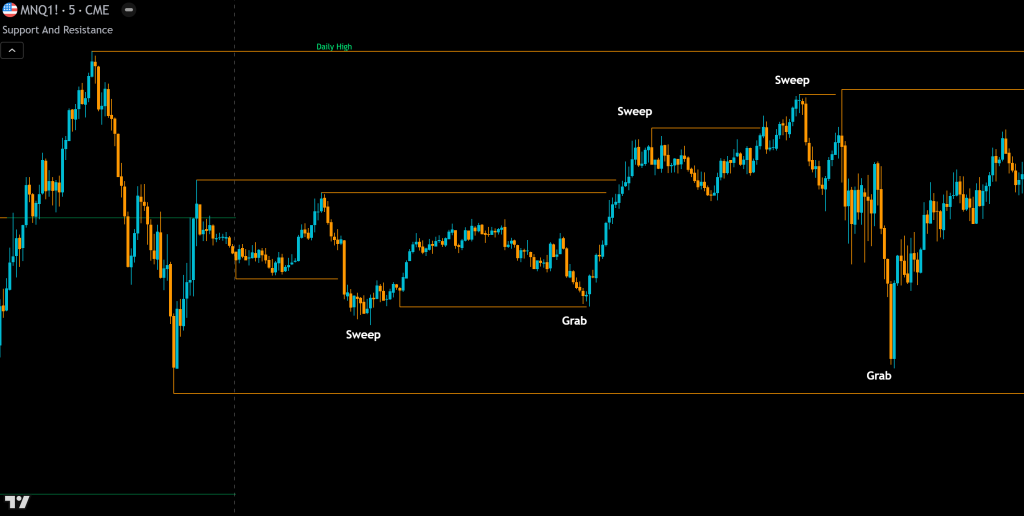
A liquidity sweep is very similar to a liquidity grab, the difference being a sweep happens with multiple candles going beyond the pivot. It could be a few candles or a string of candles that stay just beyond that key price level to gather orders before turning around. Sweeps also typically take out multiple swing highs or lows near the same level as it progresses.
A liquidity grab will move just beyond the key level pivot and then reverse quickly with a sharp move. They are both very similar, but a sweep looks to get more orders, whereas a grab is much faster and typically means the institutional traders orders have been filled enough to allow price to move in the other direction with momentum.
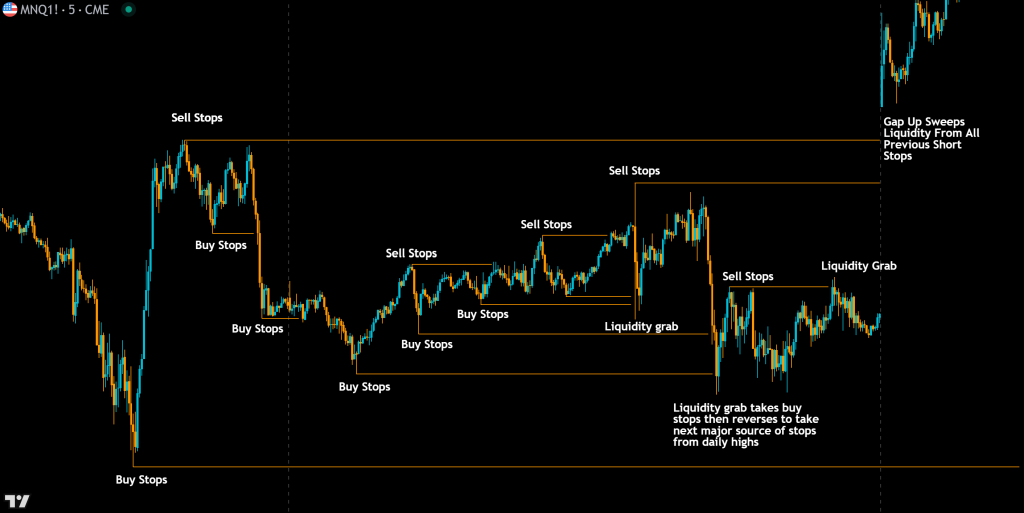
Some examples of liquidity grabs are shown below, but here are some of the main details that classify these types of price movements.

You can find liquidity grabs by looking for a major swing high or low and then identifying minor swing highs or lows that are near the major pivot high or low. The minor pivots will have a bunch of stop losses just beyond those pivots and institutional buyers will look to push price just beyond those minor pivots, but not beyond the major pivot unless they want to push price beyond that in a continuation.
This also happens on smaller time frames when markets are trending. Since many retail traders move their stop losses just beyond the most minor pivot, institutional traders will fill their orders by pushing price just past those minor pivot levels to trigger those stop losses and then allow price to continue in the direction of the overall trend.
Liquidity grabs are one of my favorite ways to trade any type of market because they allow you to get an excellent entry point and keep a tight stop loss. Here’s how to trade two types of liquidity sweeps:
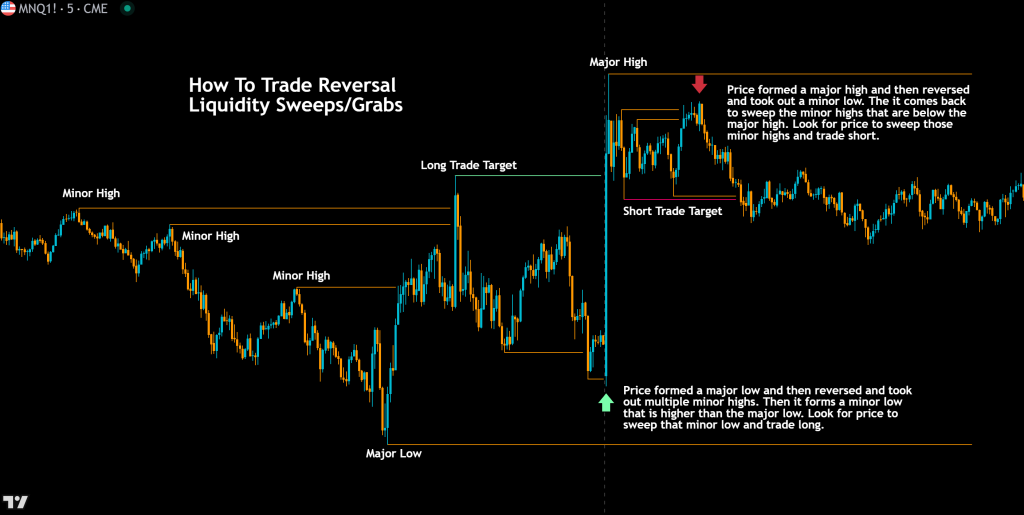
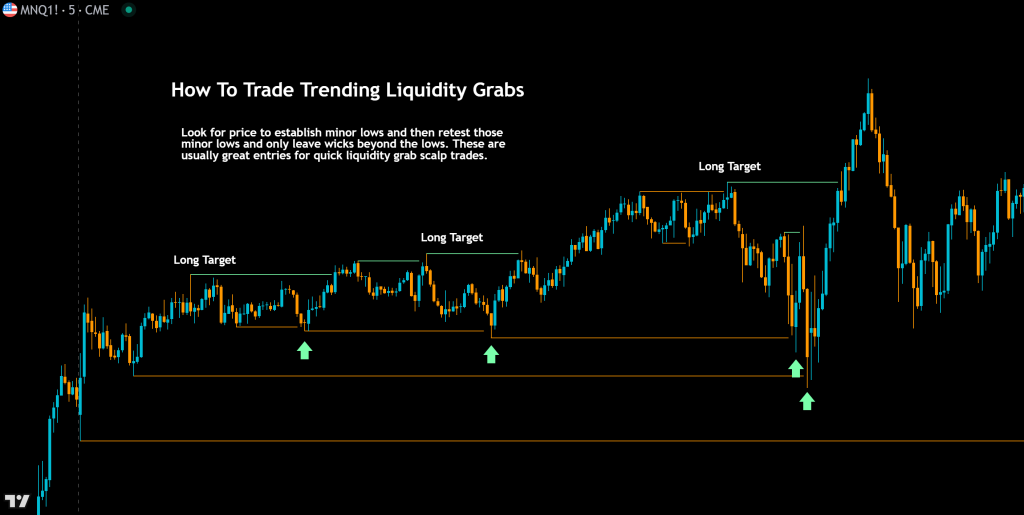
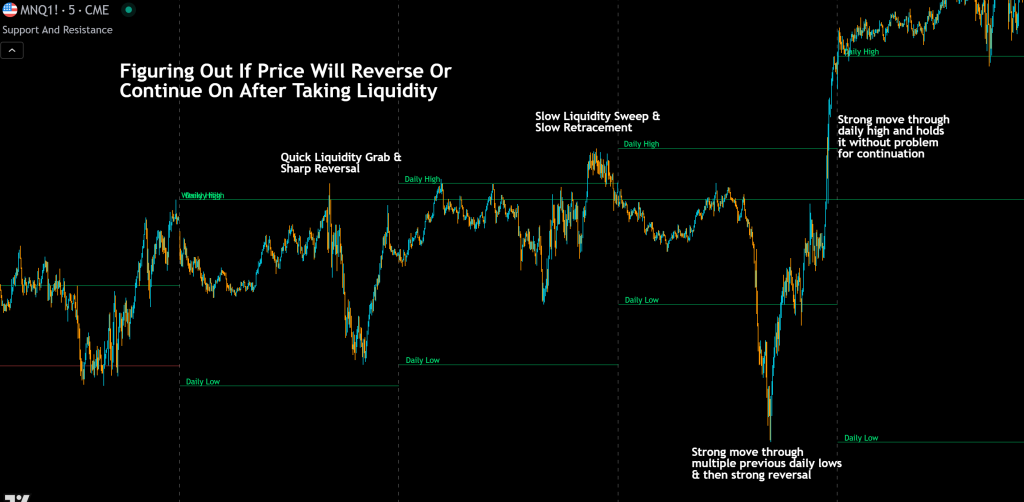
Once price takes the liquidity from a major pivot, you need to figure out if price is going to continue past that level or if it is going to reverse. Many times when price wants to make a big continuation move, price will sweep that liquidity from the major pivot and then hold just beyond it, possibly retest that level quickly and then continue.
When there is a lot of resistance at that level but it wants to continue beyond, it will usually go just past the major pivot, retrace about 25-50% of the move that swept the liquidity, consolidate and then start the continuation.
When price just taps the major pivot level and the candles do not close beyond that level, this usually means that price will reverse.
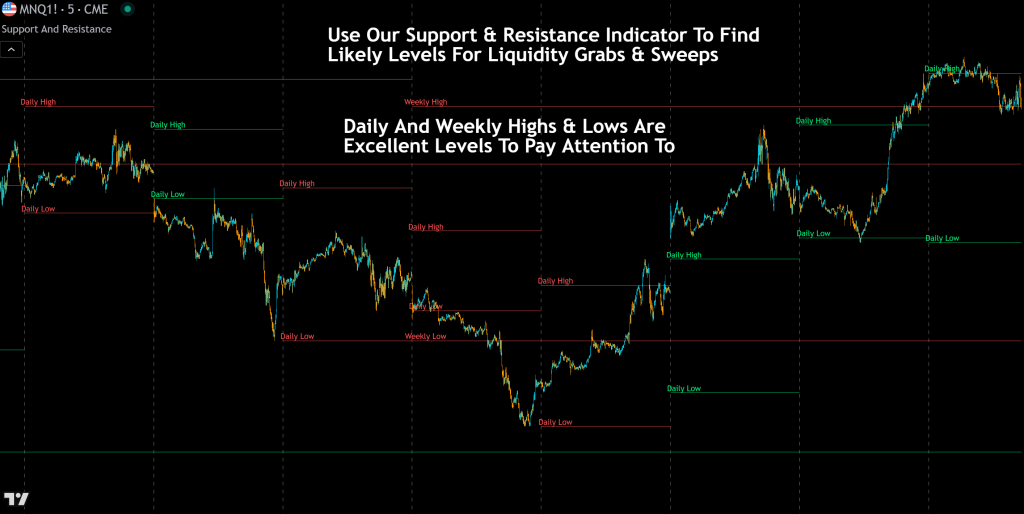
Finding levels where liquidity grabs and liquidity sweeps will happen can be done pretty easily when you have the right tools. Some of the best and most useful levels that price will have a liquidity grab at are previous day and week highs and lows. Price likes to run just beyond these levels and then turn around.
Yes. Liquidity grabs happen on every timeframe from the 1 minute chart to the monthly chart. On lower timeframes, the grabs are smaller and happen more frequently. On higher timeframes, they are larger and more significant. The concept is the same, institutional traders push price beyond pivot points where retail stop losses are clustered to fill their orders before price reverses.
The key difference is whether candles close beyond the pivot level or just wick through it. If price pushes past a major pivot but the candles do not close beyond it and quickly reverse, that is most likely a liquidity grab. If price pushes past the pivot, consolidates just beyond it and candles start closing above or below that level, it is more likely a real breakout that will continue.
Liquidity sweeps are one component of smart money concepts (SMC), which is a broader trading methodology that also includes concepts like order blocks, fair value gaps, breaker blocks and market structure shifts. You do not need to follow the entire SMC framework to trade liquidity sweeps. You can use them as a standalone strategy or combine them with other technical analysis approaches like price action or support and resistance.
BETTER TOOLS, BETTER TRADES
Explore our day trading indicators built specifically for intraday trades.